
Are All Sunscreens the Same? Mineral vs Chemical Sunscreen
Quick Answer: No. Mineral and chemical sunscreens use different active ingredients, but both can protect your skin when they offer broad-spectrum coverage and are applied correctly. Mineral formulas may suit some people with sensitive skin, while chemical formulas often feel lighter. Look for SPF 30 or higher, choose water resistance when needed, and select a sunscreen you can apply generously and reapply.
Mineral vs Chemical Sunscreen at a Glance
| Feature | Mineral sunscreen | Chemical sunscreen |
| Active ingredients | Zinc oxide, titanium dioxide, or both | One or more non-mineral UV filters |
| Texture | May feel thicker | Often feels lighter |
| White cast | More common with untinted formulas | Usually less noticeable |
| Sensitive skin | May be a useful starting point | Depends on the complete formula |
| Protection | Can work well when used correctly | Can work well when used correctly |
Some sunscreens combine mineral and chemical filters. These are often called hybrid sunscreens.
One type is not automatically better for everyone. Texture, tint, added ingredients, and how your skin reacts also matter.
What Is Mineral Sunscreen?
Mineral sunscreen contains zinc oxide, titanium dioxide, or both. These ingredients absorb ultraviolet radiation and reflect some of it.
A mineral formula may be worth considering if sunscreen often stings your skin or eyes. For example, someone with easily irritated skin may prefer a fragrance-free mineral product. However, mineral sunscreen can still cause irritation if another ingredient does not agree with the skin.
Some mineral formulas feel thick or leave a white or gray cast. A tinted option may blend more evenly, although the result depends on the tint, formula, and skin tone.
What Is Chemical Sunscreen?
Chemical sunscreen uses non-mineral UV filters that absorb ultraviolet radiation before it damages the skin.
These products often feel lighter and may blend more easily under makeup. Someone who dislikes the heavier feel or visible residue of mineral sunscreen may find a chemical formula easier to wear every day.
Chemical sunscreen is not automatically harsh or unsafe. Active and inactive ingredients vary, so a reaction to one formula does not mean every chemical sunscreen will cause the same problem.
What Do Broad-Spectrum and SPF Mean?
Broad-spectrum sunscreen protects against UVA and UVB rays. UVA rays contribute to early skin aging, while UVB rays are a main cause of sunburn. Too much exposure to either can contribute to skin cancer.
SPF mainly measures protection against UVB-related sunburn. Dermatologists recommend broad-spectrum sunscreen with SPF 30 or higher. A higher number does not mean you can stay outside longer without reapplying.
Apply sunscreen about 15 minutes before going outside. Most adults need about one ounce to cover exposed body skin. For the face, ears, and neck, the American Academy of Dermatology recommends about one teaspoon, or enough to cover the length of the index and middle fingers.
Reapply at least every two hours while outdoors and sooner after swimming, sweating, or drying off with a towel. Using too little sunscreen lowers the protection, even when the product has a high SPF.
What Does Water-Resistant Mean?
No sunscreen is waterproof. A product labeled water-resistant must state whether it maintains its labeled protection for 40 or 80 minutes while swimming or sweating.
Follow the time shown on the label and reapply after towel drying. Choose a water-resistant product for swimming, exercise, beach trips, or other activities that involve water or heavy sweating.
Which Sunscreen May Suit Your Skin?
Your skin, routine, and planned activities can help guide your choice.
A richer cream may feel more comfortable on dry skin. A light gel, fluid, or matte formula may suit someone who dislikes shine or heavy products. People with sensitive skin may start with a fragrance-free mineral formula, although some tolerate chemical or hybrid sunscreens without irritation.
Tinted sunscreen can reduce the white cast left by some mineral formulas. Products containing iron oxide may also provide added protection from visible light, which can worsen melasma, dark spots, and marks left after acne in some people.
Stop using a product if it causes ongoing burning, swelling, itching, or a rash. Bring the package or ingredient list to a qualified healthcare professional if you need help identifying a possible trigger.
Do “Clean,” Preservative-Free, or Reef-Safe Claims Matter?
Terms such as “natural,” “clean,” and “reef-safe” do not have one standard meaning and do not show how well a sunscreen protects the skin.
Preservatives help keep many skincare products stable and reduce contamination. Someone with a confirmed allergy may need to avoid a specific preservative, but preservative-free sunscreen is not automatically better for everyone.
Focus first on broad-spectrum coverage, SPF, water resistance when needed, and a formula you can apply in a full, even layer.
How Should You Choose a Sunscreen?
Start with broad-spectrum protection and SPF 30 or higher. Choose water resistance when you expect to swim or sweat.
Then compare the texture, tint, finish, and ingredient list. A daily sunscreen should feel comfortable enough to wear in a full layer. A sunscreen used outdoors should also be easy to carry and reapply.
For example, someone with dry skin may prefer a richer tinted cream, while someone who wears makeup or dislikes shine may prefer a lighter or matte finish. There is no single formula that works best for every person.
Confirmed Lumen Sunscreen Details
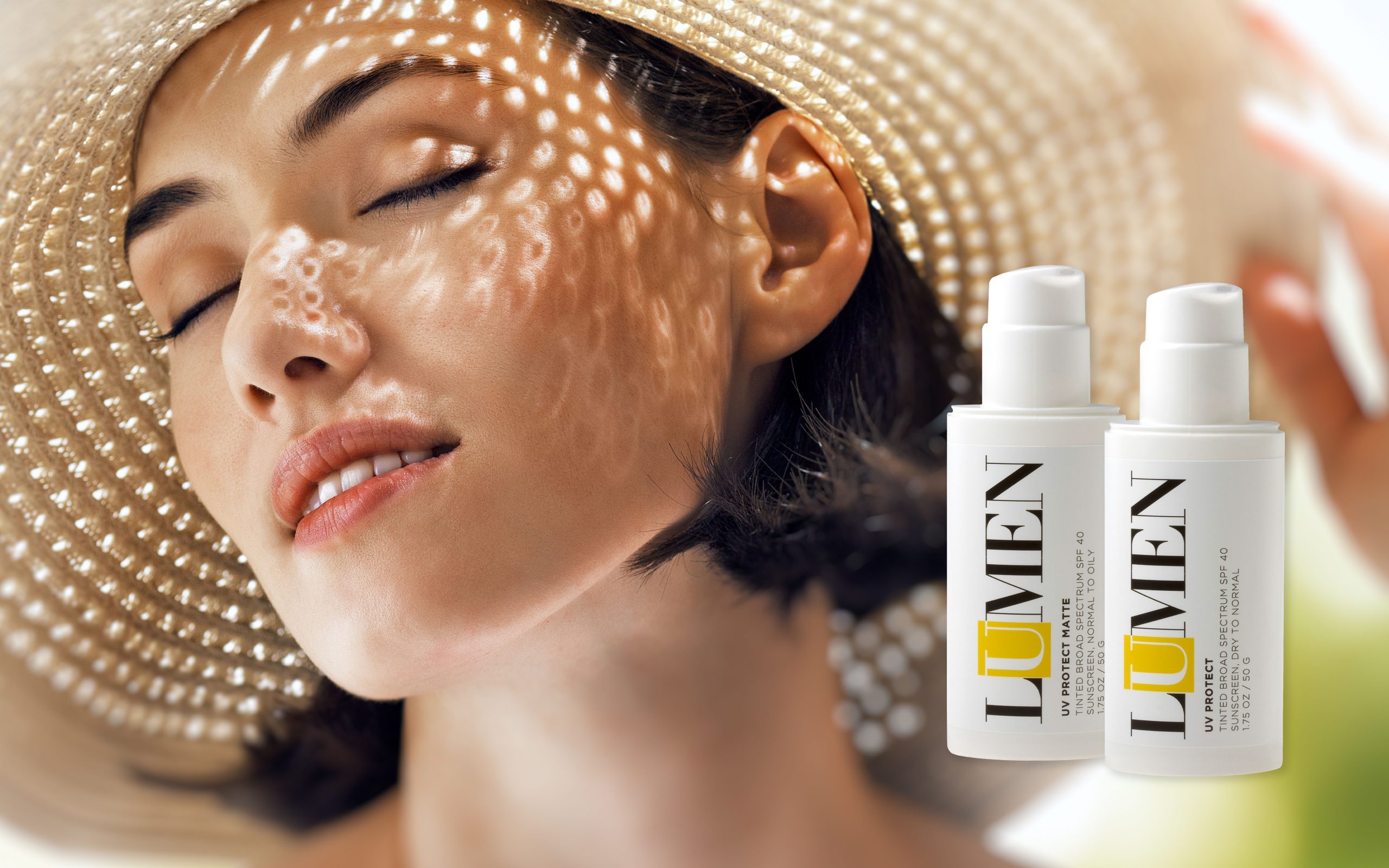
Lumen offers UV Protect and UV Protect Matte. Both are described as tinted, broad-spectrum sunscreen options.
Published Lumen information states that the formulas are similar, except UV Protect contains added barrier lipids and petrolatum for a more moisturizing feel and dewy finish. UV Protect Matte has a less dewy finish.
Both are described as containing vitamin C, vitamin E, melanin, and ferulic acid and as being free from fragrance, parabens, and preservatives.
Lumen’s current official UV Protect page lists that product as SPF 40. The SPF and water-resistance rating for UV Protect Matte should be confirmed from its current Drug Facts label before publication. Do not assume the two products have the same water-resistance rating simply because their formulas are described as similar.
LUX has not publicly confirmed that one formula is specifically recommended for dry, oily, sensitive, or acne-prone skin. UV Protect’s added lipids and petrolatum suggest a richer finish, but a skin-type recommendation should come from the current label or direct guidance from LUX rather than inference alone.
What Should You Confirm Before Buying?
Before choosing either Lumen option, check:
- The current SPF and active sunscreen ingredients
- Whether it is water-resistant for 40 or 80 minutes
- How much to apply and when to reapply
- Whether the tint and finish work with your skin and routine
Product formulas and labels can change, so use the current package directions rather than relying only on older website copy.
Discuss Sunscreen Options at LUX
Contact LUX A Medical Spa in Bluffton if you need help comparing sunscreen ingredients, tint, texture, or finish. Bring the products you currently use and mention any history of stinging, breakouts, rash, dryness, or white residue.
A skincare consultation may help you compare available options, but the final choice should be based on the current product label, your skin history, and how you plan to use the sunscreen.

LUX ~ A Medical Spa is co-owned by board-certified dermatologist Dr. Carmen A. Traywick and board-certified plastic surgeon Dr. Frederick G. Weniger. Serving Bluffton, Hilton Head, and Port Royal, their clinical team blends dermatological science with surgical expertise to deliver advanced non-invasive aesthetics. They share expert insights on skincare, anti-aging treatments, laser therapies, and body contouring to help Lowcountry clients achieve natural, radiant results.